6-Stage Reverse Osmosis · Drinking Water
Puronics® Reverse Osmosis systems remove up to 99% of contaminants from your drinking water, then add beneficial minerals back in for clean, great-tasting, alkaline water — right at your kitchen sink.
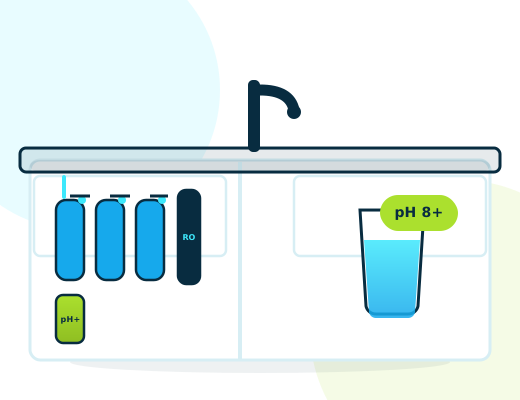
Why Reverse Osmosis
A whole-house softener conditions water for your entire home. Reverse osmosis is a separate, far more thorough filtration process built specifically for the water you drink and cook with — it forces water through a semipermeable membrane to remove dissolved solids and contaminants that a softener alone won't touch.
Because the RO process also strips out beneficial minerals along with the bad stuff, our systems add an alkalizing remineralization stage at the end — restoring calcium, magnesium and potassium, and raising the water's pH.
Micromax™ 6-Stage Process
Mechanical reduction of rust and particles, protecting the membrane downstream.
An initial carbon stage begins reducing chlorine and organic compounds.
Reduces flavors, odors, chlorine and organic impurities before the membrane.
Reduces dissolved solids — including a range of heavy metals, plus Giardia and Cryptosporidium cysts.
A final activated-carbon cartridge polishes away any remaining taste or odor.
Restores beneficial minerals and raises pH to roughly 7.5–9.5 for clean, alkaline drinking water.
Built for the Kitchen
Questions We Hear Often
Standard filters trap particles. RO forces water through a semipermeable membrane, which also removes smaller dissolved contaminants — including certain chemicals and heavy metals — that a typical filter can miss.
It varies by usage, but as a general guide: pre-filters every 6–12 months, the RO membrane every 2–3 years, and post-filters about once a year. We'll set a reminder schedule for your household during installation.
Yes — RO membranes remove minerals along with contaminants, which is why our systems include a remineralization and alkalizing stage afterward to add essential minerals back in.
Heavy metals, dissolved solids, chlorine taste and odor, and waterborne cysts like Giardia and Cryptosporidium are reduced through the multi-stage process — up to 99% of contaminants overall.